
Close Menu
California Flyer
    What's Hot

    Swift Fuels announces the FAA’s expansion of our 100R Unleaded Avgas “Approved Model List” (AML) adding to our original FAA Supplemental Type Certificate (STC)

    July 15, 2026

    Garmin unveiled AXIS – an all-new family of flight displays

    July 8, 2026

    BERINGER AERO Selected to Supply Wheels and Brakes for Eve Air Mobility’s eVTOL

    July 8, 2026

    Please change to: Subscribe for Free

    Receive the latest news and events in California’s aviation community.
    Your email is safe with us.

    Facebook X (Twitter) Instagram
    California Flyer
    • Articles
    • About Us
    • Contact Us
    Facebook X (Twitter)
    California Flyer
    Home » Articles » Lycoming Engine’s UL94 Valve Seat Recession Investigation Update
    Articles

    Lycoming Engine’s UL94 Valve Seat Recession Investigation Update

    kentBy kentApril 16, 20242 Mins Read
    Share
    Facebook Twitter

    Lycoming Engines conducted a root cause analysis of this issue, including further testing of UL94

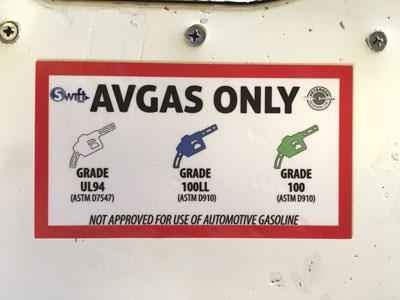
    WILLIAMSPORT, PA – In June 2023, the University of North Dakota (UND) Aviation program transitioned its fleet from 100LL to use UL94, a 94-octane unleaded fuel. In October, after logging 46,000 hours using UL94, UND identified abnormal valve seat recession in its Lycoming engines. Following a risk assessment, UND announced its decision to revert back to 100LL.

    Lycoming Engines conducted a root cause analysis of this issue, including further testing of UL94. This analysis has determined that the engine components and airframe components conform to specification and are not believed to contribute to valve seat recession.  However, testing has also demonstrated that, under certain conditions, use of UL94 may impact valve seat recession.

    Analysis indicates that aromatic concentration tolerances for UL94 may contribute to valve seat recession in certain flight profiles.  Aromatic limits are not directly specified by ASTM D7547, and elevated aromatic concentration may result in slower flame speed, radiant heat from particulates, and particulate abrasiveness to valve seats that may contribute to valve seat recession.

    Lycoming Engines is working with the Federal Aviation Administration to evaluate the sensitivity of piston engines to aromatics in fuels. If indicated by this further analysis, we will work with industry to further define ASTM D7547 provide appropriate guidance to operators regarding how leaning techniques can impact valve seat recession with high aromatic fuels.

    Lycoming Engines remains committed to the FAA Eliminate Aviation Gasoline Lead Emissions (EAGLE), a cross-functional industry effort to identify and deploy a high-octane unleaded replacement for 100LL for piston-engine aircraft by the end of 2030.

    featured Featured 2
    kent

    Related Posts

    news July 15, 2026

    Swift Fuels announces the FAA’s expansion of our 100R Unleaded Avgas “Approved Model List” (AML) adding to our original FAA Supplemental Type Certificate (STC)

    news July 8, 2026

    Garmin unveiled AXIS – an all-new family of flight displays

    news July 8, 2026

    BERINGER AERO Selected to Supply Wheels and Brakes for Eve Air Mobility’s eVTOL

    news July 1, 2026

    CLEVELAND WHEEL & BRAKE SYSTEMS AND PILATUS EXTEND RELATIONSHIP

    news June 29, 2026

    Frontier Scimitar Propeller STC Approved for Continental-Powered Cessna Skywagons

    news June 23, 2026

    NASA astronauts, “Memphis Belle” cast headline Theater in the Woods at EAA AirVenture Oshkosh 2026

    Comments are closed.

    Subscribe for Free

    Receive the latest news and events in California’s aviation community.
    Your email is safe with us.

    Facebook X (Twitter)
    • Home
    • Articles
    • About Us
    • Contact Us
    © 2026 Aviation Group
    website design and development by Dream Warrior Group

    Type above and press Enter to search. Press Esc to cancel.